
How Much Can C&I ESS Really Save Your Business? A Deep Dive Analysis
The Tipping Point: Why C&I Energy Storage is Exploding in 2025
Why is this happening now? The "Wait and See" era is officially over. Three critical factors have converged to make 2025 the optimal year for investment:
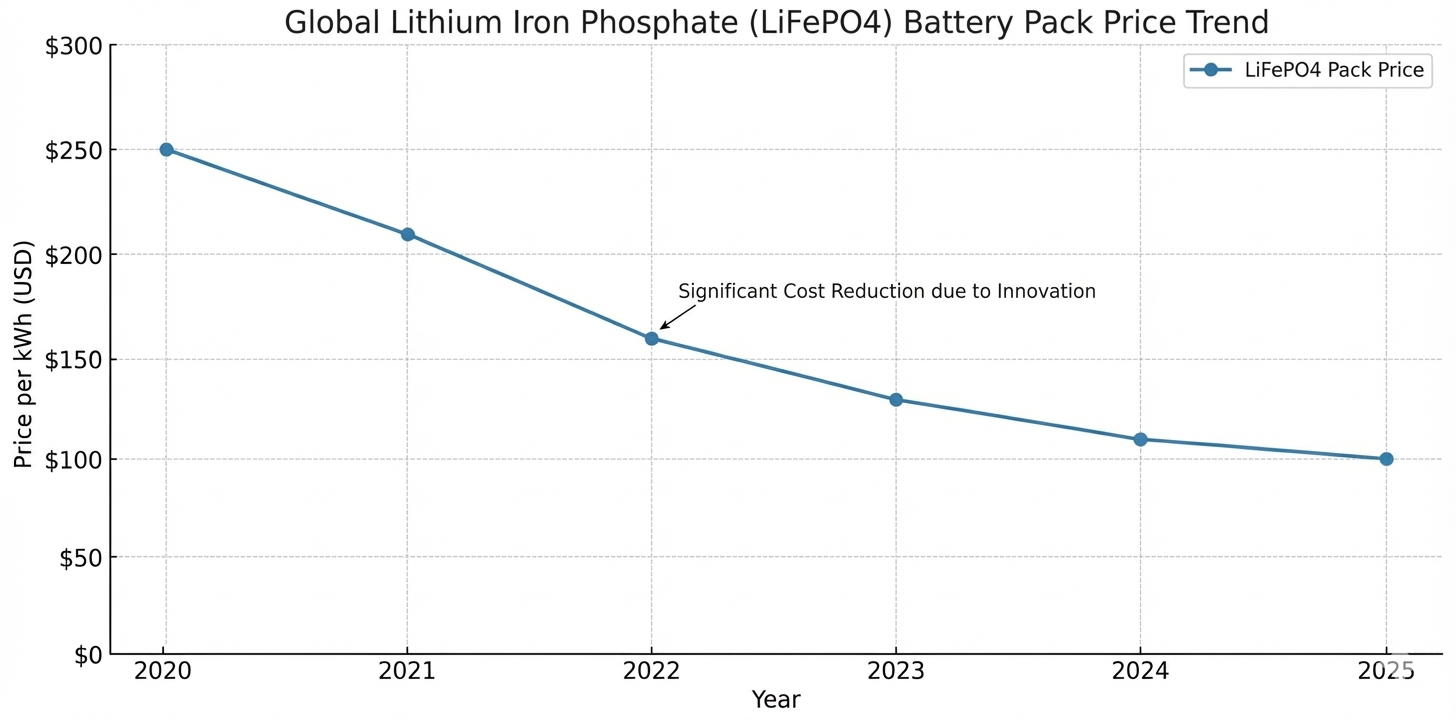
Figure 1: Global price trend of LiFePO4 battery packs (2020-2025)
- Plummeting LiFePO4 Battery Costs (The Economic Driver): The most significant catalyst is the dramatic reduction in the cost of Lithium Iron Phosphate (LiFePO4) cells. As raw material prices stabilize, the initial Capital Expenditure (CAPEX) has dropped significantly, shortening the ROI period from 6-8 years to a compelling 3-5 years.
- Volatile Grid & Rising Electricity Rates: From Europe to North America, grid instability is the "new normal." A C&I ESS acts as a financial shield, protecting companies from spiking peak hour rates and costly power outages.
- Policy & Carbon Mandates: With incentives like the IRA in the US and carbon regulations in the EU, installing storage is now a compliance strategy that leverages tax credits to improve the bottom line.
Who Needs It Most? Top 3 Use Cases
While every business consumes electricity, the value of an ESS is maximized in sectors with high energy intensity. Based on current market trends, here is who stands to gain the most:
1. Manufacturing Plants: Crushing Demand Charges
The Pain Point: Industrial machinery creates massive power spikes during startup. These spikes trigger high "Demand Charges" from utility companies, which can account for 50% of the bill.
The Solution: An IHT Energy C&I ESS acts as a buffer. It discharges during peak load times to flatten the demand curve (Peak Shaving), significantly reducing monthly bills.
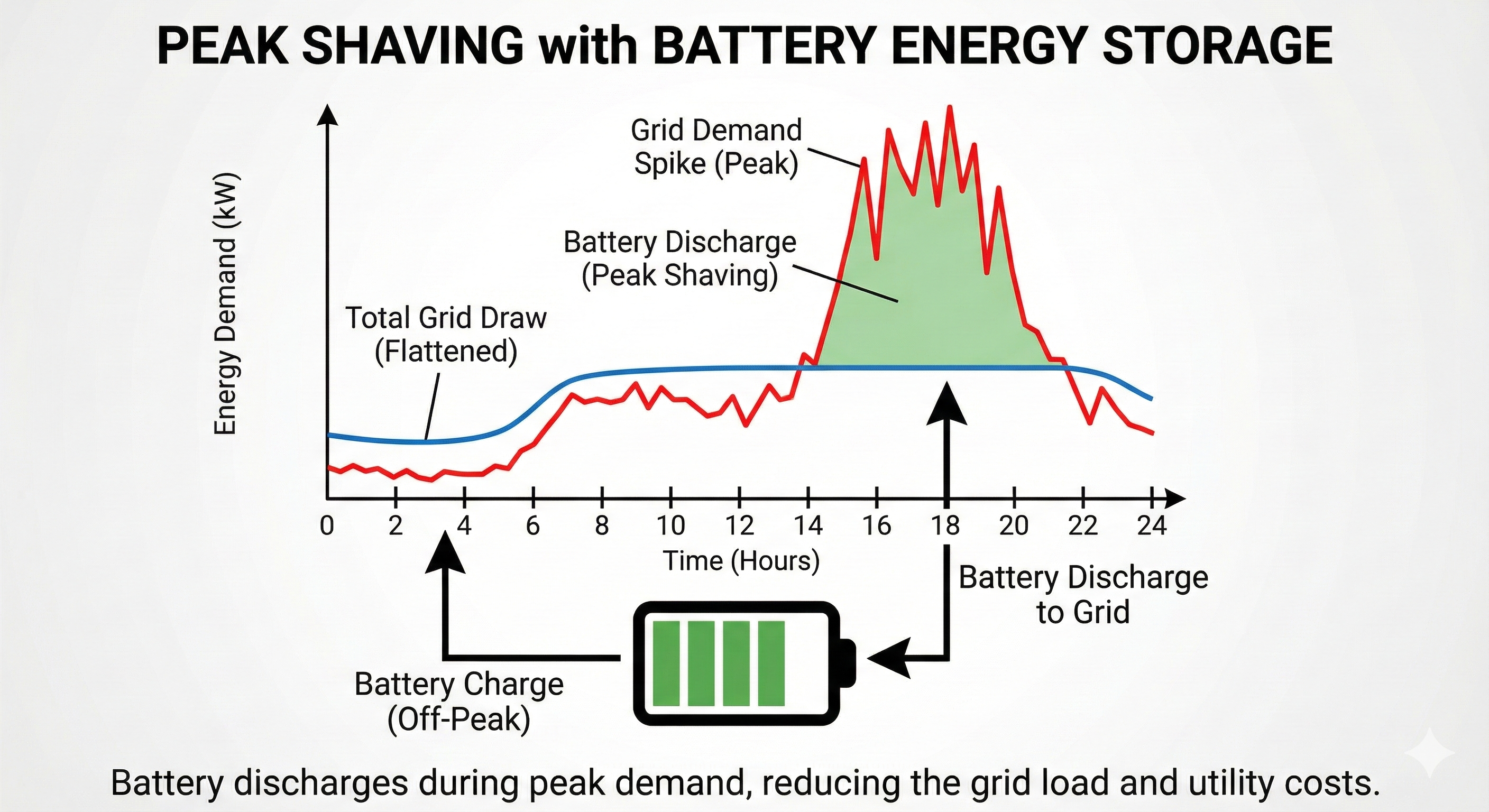
Figure 2: How ESS flattens energy spikes to reduce demand charges
2. Shopping Malls & EV Charging Hubs
The Pain Point: Adding fast chargers for Electric Vehicles (EVs) puts immense strain on transformer capacity. Upgrading the transformer is expensive and slow.
The Solution: Storage systems allow malls to store cheap electricity at night and use it during the day to support EV chargers without needing expensive grid capacity upgrades.
3. Data Centers
The Pain Point: Downtime is not an option. Traditional UPS systems have short lifespans.
The Solution: Replacing legacy UPS with Lithium-ion (LFP) ESS offers higher energy density, faster response times, and a reduced carbon footprint.
The Financial Breakdown: How C&I ESS Cuts Your Bill
How does an IHT Energy Storage System turn electricity usage into a cost-saving strategy? The savings come from three distinct mechanisms:
- Demand Charge Management: By "shaving" power spikes, you keep your grid draw flat and lower the demand charge portion of your bill—often the most expensive part.
- Time-of-Use (ToU) Arbitrage: The classic "Buy Low, Sell High" strategy. The system charges at night when rates are cheap ($0.08/kWh) and discharges during the day when rates skyrocket ($0.30/kWh).
- Backup Power (The Invisible Savings): Avoiding just one major production stoppage per year due to a blackout can save tens of thousands of dollars in wasted materials and idle labor.
Real-World ROI Analysis: When Will You Break Even?
Let’s simulate a calculation for a typical medium-sized manufacturing plant using a standard IHT Commercial Liquid-Cooling ESS (e.g., 100kW / 215kWh).
The Scenario:
- Electricity Price Spread: $0.25/kWh
- Demand Charge Savings: $15/kW per month
- Operation Days: 300 days/year
The Annual Savings
- Energy Arbitrage: 200kWh × $0.25 × 300 days = $15,000
- Demand Charge Management: 50kW × $15 × 12 months = $9,000
- Total Annual Savings: $24,000
The Payback Period
With an estimated system investment of roughly $85,000 (market average):
$85,000 (Cost) ÷ $24,000 (Savings) ≈ 3.5 Years
*Note: If you are eligible for incentives like the US IRA Tax Credit (30%), this payback period can drop to roughly 2.5 years.
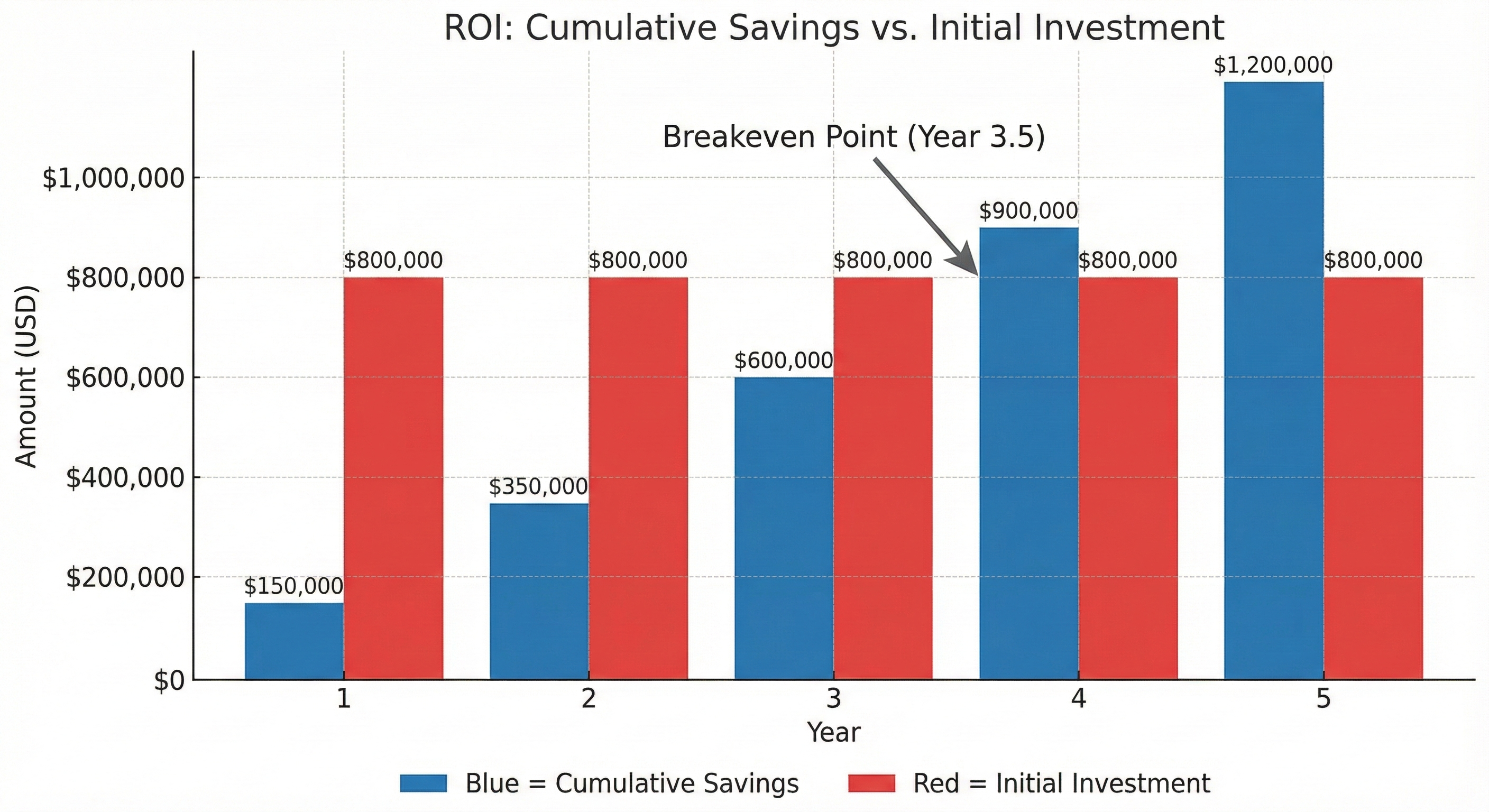
Figure 3: Cumulative Savings vs. Initial Investment
Technology Shift: Liquid Cooling vs. Air Cooling
In 2025, the industry is shifting from Air Cooling to Liquid Cooling. Why does this matter? It’s about efficiency and lifespan.
| Feature | Traditional Air Cooling | IHT Liquid Cooling |
|---|---|---|
| Temp Difference | High (>10°C) | Ultra-Low (<3°C) |
| Energy Density | Low (Requires air ducts) | High (+30% space saving) |
| Lifespan | Standard degradation | Extended Cycle Life (+20%) |
The Verdict: IHT’s liquid cooling technology keeps battery cells within a tight 3°C temperature range. This thermal consistency extends the system's lifespan and reduces the Levelized Cost of Energy (LCOE) over 10 years.
How to Configure Your System
Don't buy off the shelf. Size your system based on your data:
- Analyze Your Load Profile: Look at your 15-minute energy intervals. Do you have sharp spikes or long plateaus?
- Power (kW) vs. Capacity (kWh):
- For Peak Shaving, we recommend a 0.5C system (2-hour duration).
- For Backup Power, a 1C system provides a powerful burst of energy.
- Scalability: Start with a modular 100kW/215kWh cabinet. As your business grows, simply plug in more units parallel.
Success Stories: Seeing is Believing
Case Study 1: The Precision Metal Factory
Challenge: Massive power spikes at 10:00 AM caused high demand charges.
Solution: 2 sets of IHT Liquid-Cooled Outdoor Cabinets.
Result: Demand charges reduced by 40%. Annual savings of $45,000.
Case Study 2: The Commercial Plaza
Challenge: Needed to install EV chargers but faced a $200,000 grid upgrade cost.
Solution: IHT ESS + Solar integration.
Result: Avoided the grid upgrade entirely and achieved green energy targets.
Ready to Start? How to Get a Custom Proposal
Buying an ESS is a tailored engineering project. To provide you with an accurate ROI analysis, we need your energy "DNA". Here is the IHT Energy Fast-Track Checklist:
Provide This Data for a Quote within 48 Hours:
- Electricity Bills: Last 12 months (to see seasonal trends).
- Load Profile: 15-minute interval data (Crucial for demand charge analysis).
- Installation Site: Indoor or Outdoor? (IHT cabinets are IP67 rated).
- Voltage: e.g., 400V/50Hz or 480V/60Hz.
Don't Leave Money on the Table
The best time to plant a tree was 20 years ago. The second best time is now. Every month you wait is another month of paying unnecessary peak rates.
Get Your Free ROI Assessment
Send us your load data, and our engineering team will calculate exactly how much you can save.
Post time: Dec-19-2025

